
 By
By 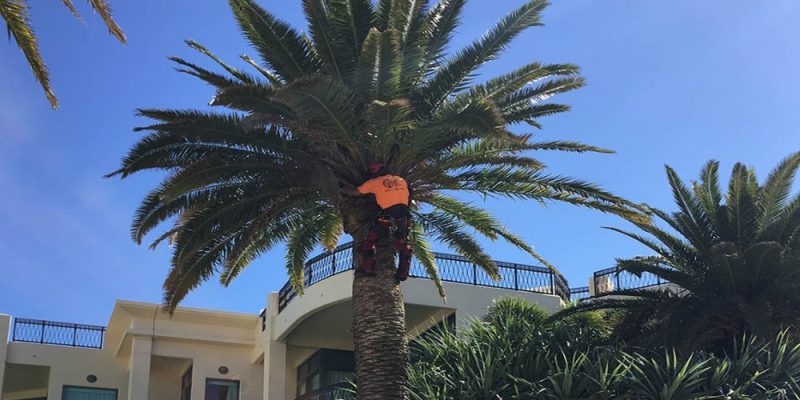
Arborists who work the Gold Coast regularly hear the same thing from homeowners after a palm fails. It looked completely fine. And the frustrating part is that it probably did. Palms do not thin out at the edges, drop the occasional branch, or develop a noticeable lean over months, the way a broad-leafed tree signals its decline. They hold their appearance until something internal reaches a point of no return, and then they fail. That compressed timeline between healthy appearance and structural failure is what makes palm tree removal in Gold Coast properties a decision that rewards acting earlier rather than waiting for a visible reason.
Nothing Shows Until It Does
A broad-leafed tree in trouble leaves a trail. Branches die progressively. The canopy thins from the outside inward. Bark separates. There are usually months of observable changes before anything falls. Palms grow from a single point at the crown tip and nowhere else. When disease or borer damage reaches that point, the trunk below stays solid, and the outer fronds hold their colour for a while. Nothing on the outside reflects what is happening at the core. Then the crown detaches. It happens without a creak or a lean or any of the cues people instinctively wait for. A falling palm crown is not a branch. It is the entire top of the tree, and it lands with force.
Dead Fronds Are Not Just an Eyesore
A skirt of dead fronds hanging against the trunk looks like a maintenance oversight. It is doing considerably more than that. The accumulated material sits warm and damp against the trunk surface, which is exactly the environment that several borer species active on the Gold Coast need to establish and breed. Larvae work their way upward through that material toward the crown over time. The fronds also trap moisture where they attach to live tissue, which is where fungal decay enters. By the time borer damage becomes visible in the crown – distorted new growth, discolouration, and fronds that do not open properly – the infestation has been working upward for a long time. Clearing the skirt is not cosmetic tidying. It cuts off the corridor.
Canal Banks Do Not Always Hold
Palm tree removal in Gold Coast canal-side properties carries a specific risk that gets skipped in standard removal quotes. Canal banks are undermined gradually by tidal movement and by the root systems of whatever has been growing along them. The surface looks firm. Below the ground, it can be significantly less stable than it appears. Equipment positioned close to a canal edge without probing the ground first has settled on Gold Coast jobs in ways that turned a contained removal into something considerably more complicated. Palm debris entering the water creates a separate problem – navigation hazard, council attention, and retrieval work. Neither outcome is simple once it has happened.
Roots Go Further Than the Trunk Suggests
People look at a palm trunk and assume the root system is similarly narrow and contained. It is not. Palm roots spread laterally at shallow depths and cover a wide area relative to what the canopy above suggests. A palm sitting a reasonable distance from a pool can have roots running under the coping, tracking along the base of the pool shell, and working into expansion joints in the surrounding paving. Those roots do not release cleanly during removal. They pull at the surfaces they have grown into. Finding this out during the job rather than before it is how the scope of a straightforward removal expands into something more disruptive.
Leaving the Stump In Is Not Neutral
Cutting the trunk and leaving the root ball in the ground feels like a reasonable compromise. It is not as neutral as it looks. Fungal pathogens that colonise declining palms – Ganoderma in particular – persist and remain active in root material after the visible palm is gone. In Gold Coast gardens where palms grow near each other, that fungal activity moves through soil contact and shared root zones to adjacent trees. Properties that removed one failing palm and left the stump have watched neighbouring palms begin declining within a season or two. The stump is not inert. It is a source.
Conclusion
The risks that make palm tree removal in Gold Coast properties worth taking seriously are mostly invisible until they are not. A crown that fails without warning, borer corridors in accumulated frond skirts, unstable canal banks that look fine from above, lateral roots under pool infrastructure, and diseased stumps spreading fungal load to neighbouring trees – none of these announces themselves clearly before they become problems. A proper site assessment before any removal work begins is what makes the difference between resolving a risk and simply moving it somewhere less visible.







Comments