
 By
By 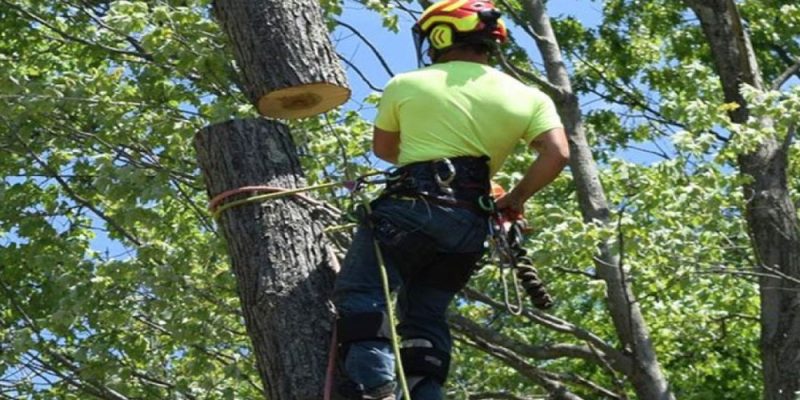
There is a version of tree care that most Gold Coast homeowners are familiar with – call someone when a branch looks dangerous, get it removed, and move on. What that approach consistently misses is the category of tree problems that do not look dangerous until they are. Arboricultural training exists specifically to close the gap between what is visible at the surface and what is actually happening inside a tree’s structure, root system, and vascular tissue. A tree arborist in Gold Coast is not simply someone with a chainsaw and insurance – the diagnostic knowledge they carry changes outcomes in ways that become apparent only when something goes wrong on an unmanaged property.
Epicormic Growth Is a Warning
Drive through any Gold Coast suburb after a dry summer, and you will see trees pushing dense clusters of small shoots directly from their trunks and major limbs. To most observers, this reads as vigorous, healthy growth. To an arborist, it reads as a distress signal. Epicormic growth is a tree’s emergency photosynthesis response – it appears when the canopy has been compromised, when roots have been damaged by construction or compaction, or when internal decay has disrupted normal vascular function. The shoots themselves are not the problem. They are the tree’s way of announcing that something below the surface warrants investigation before it reaches the point of structural failure.
What Included Bark Actually Means
Fork unions where two stems diverge are not structurally equivalent. When bark tissue becomes trapped within a fork rather than forming a clean collar at the union, the resulting joint lacks the interlocking wood grain that provides tensile strength. A qualified tree arborist in Gold Coast identifies included bark during routine inspections and assesses it against the weight of the stems involved, the tree’s species-specific failure patterns, and whether proximity to structures or people elevates the consequence of failure. This is the category of assessment that explains why some trees come down in moderate winds while adjacent trees in the same storm remain intact – the failure was structural, not meteorological.
Pruning Wounds Either Close or They Don’t
The branch collar – the slightly swollen tissue at the base of every branch – is where a tree’s compartmentalisation response begins after a cut is made. Remove the collar with a flush cut, and the tree loses its primary mechanism for sealing the wound. Leave a stub beyond it, and dead wood becomes a permanent entry point for decay fungi. Neither outcome is immediately visible. Both play out over years as internal rot columns that migrate towards the main stem. Qualified arborists cut to the collar precisely because they understand that the pruning decision made today determines whether that wound closes cleanly within a season or opens a decay pathway that quietly compromises structural integrity across the following decade.
Root Behaviour Varies by Species
Generic advice about keeping trees away from structures assumes a uniform root behaviour that does not exist across the range of species planted across Gold Coast properties. Ficus species, prevalent throughout the region’s older suburbs, extend structural roots at distances and with a vigour that makes generic setback advice inadequate. They respond to moisture gradients by actively pursuing irrigation lines, pool shells, and stormwater infrastructure. Lophostemon and Eucalyptus species behave differently again. An arborist assessing a tree near a structure draws on species-specific knowledge of how that particular tree allocates root growth, which changes both the risk assessment and the management recommendation substantially.
Council Vegetation Rules Have Layers
Gold Coast City Council’s vegetation management framework is not a single permit requirement – it operates across multiple overlays, significant tree registers, and species-specific protections that interact in ways that are not immediately obvious from a basic permit search. Trees within character residential overlays, properties near waterways, and specimens on the significant tree register each carry different requirements. Homeowners who proceed without understanding which category applies have received enforcement notices requiring replanting and remediation. Local arborists who work within this framework regularly know how to assess which works fall within exemptions, which require formal application, and how to prepare documentation that withstands council scrutiny.
Conclusion
What a tree arborist in Gold Coast brings to a property is not just the technical ability to work safely at height – it is a diagnostic framework that identifies problems at the stage when management options are still broad. Internal decay, structural union failures, root conflicts with infrastructure, and regulatory exposure are all categories of risk that develop quietly on unmanaged properties. The trees that never become emergencies are almost always the ones that received informed professional attention before the problem became the only thing visible.





Comments