
 By
By 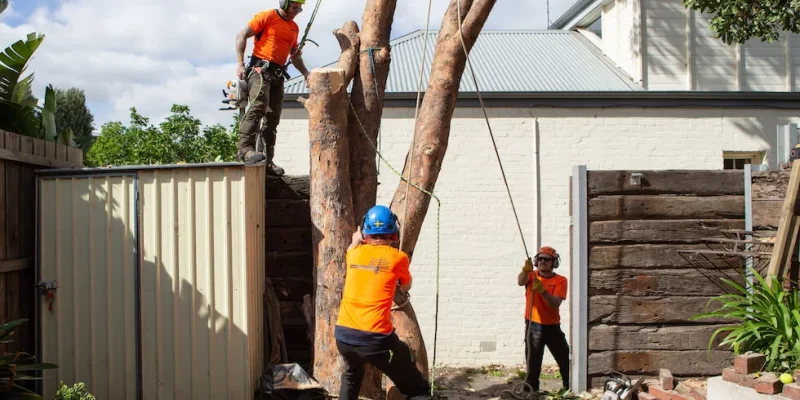
Large tree removal demands precision, planning, and strict safety control. A mature oak, beech, or cedar may weigh several tonnes. Thick limbs stretch across roofs, fences, and gardens. One wrong cut can cause severe damage. Skilled arborists follow a clear process. They assess the site, prepare equipment, control each cut, and remove the tree piece by piece. This method protects property, workers, and the surrounding landscape.
Professional crews rely on training, experience, and specialised equipment. Every movement remains controlled. Each section of timber is lowered safely to the ground. Industry safety standards and arboricultural guidance can be found through the Arboricultural Association guidance on tree work safety.
Careful Site Inspection Before Any Cut
Professional arborists begin with a full tree inspection. They study the tree structure, trunk condition, branch spread, and lean. They also check for decay, cracks, or weak limbs.
The surrounding environment matters just as much. Workers identify hazards such as:
- Nearby buildings
- Garden structures
- Overhead cables
- Roads or footpaths
- Greenhouses or fences
They measure the space around the tree. This helps determine whether they can fell the tree in one piece or dismantle it section by section.
Most large trees in residential areas require controlled dismantling. Arborists climb the tree and remove it in stages. This technique prevents damage and keeps the work area safe.
Professional Safety Equipment
Large tree removal requires specialised equipment designed for height and heavy timber. Arborists use protective gear and climbing systems to control every movement.
Essential equipment includes:
- Climbing harness and ropes
- Helmet with face shield and ear protection
- Chainsaw protective trousers
- Steel-toe boots with grip soles
- Rigging ropes and pulleys
- Lowering devices for controlled branch descent
The climber secures ropes to strong anchor points within the tree canopy. This system supports body weight and stabilises movement while cutting branches.
Ground workers manage the ropes below. They guide each cut section safely to the ground.
Strategic Branch Removal
Professionals never start with the trunk. They begin at the outer canopy. Branches come off first.
This process reduces weight and creates space to work. The climber moves carefully along limbs while secured by ropes.
Each branch gets cut into small sections. The climber attaches rigging ropes before cutting. Ground staff then lower the branch slowly.
This technique prevents branches from crashing into buildings or gardens. It also stops sudden swings that could destabilise the climber.
Large branches often weigh hundreds of kilograms. Controlled lowering keeps the operation stable and safe.
Rigging Systems Control Heavy Timber
Rigging forms the backbone of safe tree dismantling. Arborists use pulleys, friction devices, and strong ropes to guide heavy timber.
A rigging pulley attaches high in the tree. The rope runs through it and connects to the branch or trunk section. When the climber cuts the wood, the ground crew controls the rope.
This system slows the descent of the timber. Workers guide the piece safely to the ground.
Without rigging, heavy limbs would drop freely. That would risk damage to buildings, vehicles, or garden features.
Rigging also protects the climber. It prevents sudden shifts in tree balance during cutting.
Sectional Trunk Removal
Once the branches come down, the arborist works on the trunk. At this stage, the tree stands as a tall pole.
The climber ascends the trunk using climbing spikes. These metal spikes strap to the boots and grip the bark.
The arborist cuts the trunk into manageable sections. Each piece gets lowered using rigging ropes.
Sections often measure 30 to 60 centimetres thick, depending on trunk diameter. Smaller pieces remain easier to control and safer to handle.
Ground workers move quickly. They clear timber away from the drop zone and prepare ropes for the next cut.
This organised rhythm allows crews to dismantle very large trees with precision.
Mechanical Assistance for Extreme Cases
Some trees stand in difficult locations. Tight gardens, narrow streets, or unstable trunks may prevent climbing.
In these cases, arborists bring mechanical equipment such as:
- Mobile cranes
- Elevated work platforms
- Compact tracked lifts
A crane can lift entire sections of trunk directly from the tree. Workers attach lifting straps before cutting. The crane operator then supports the weight while the arborist completes the cut.
This method removes large timber sections quickly and safely, especially near buildings.
Ground Crew Coordination
Tree removal works best as a team effort. The climber and ground crew communicate constantly.
Ground workers manage ropes, guide timber, and control the work zone. They also operate the wood chipper and remove debris.
Clear signals prevent confusion during cutting. Every team member understands when the climber prepares to release a section.
Strong coordination keeps the job efficient and safe.
Debris Processing and Site Clearance
After dismantling the tree, crews process branches and timber immediately. A wood chipper shreds smaller branches into mulch. This reduces waste volume quickly.
Large trunk sections become logs. Homeowners often keep these for firewood. If not, arborists transport them to recycling facilities.
Crews rake the garden and clear sawdust, twigs, and wood chips. Professional teams leave the site tidy and safe.
Stump Removal
The final stage involves stump treatment. Some homeowners leave the stump in place. Others request stump grinding.
A stump grinder cuts the remaining wood below ground level. Rotating blades grind the stump into small wood chips.
Grinding removes the visible stump and prevents regrowth. The ground becomes level again, ready for grass or planting.
Skilled Tree Removal Protects Property
Large trees add beauty and property value. Yet removal requires skill, planning, and strong safety control.
Professional arborists dismantle trees step by step. They secure ropes, cut precise sections, and control every movement. Their training and equipment prevent accidents and protect nearby structures.
With the right team and method, even the largest tree can come down safely and efficiently.
Comments