
 By
By 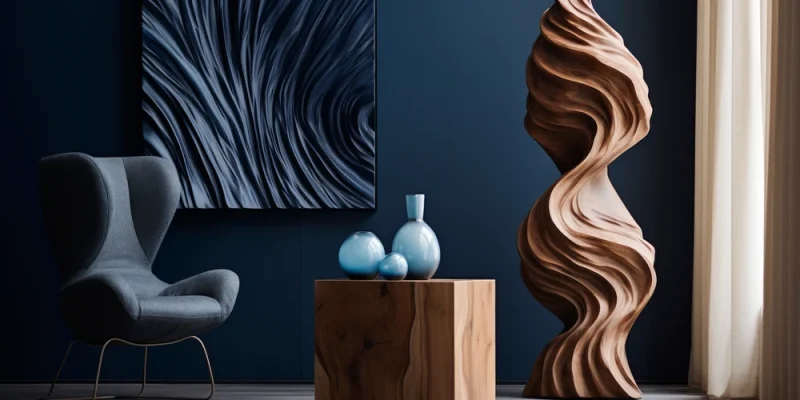
Rooms that feel designed – put-together, intentional, like someone made actual choices – share a quality that’s easy to recognize and harder to name. It isn’t expensiveness, and it isn’t the presence of any particular style. It’s something closer to hierarchy: some things in the room draw your eye, other things support them, and the relationship between the two creates a composition rather than a collection. Understanding that distinction is the closest thing to a universal principle in interior design.
What Makes a Statement Piece
A statement piece is anything that draws deliberate attention – that you notice first when you enter a room and that anchors the eye before it moves to anything else. It earns that attention either through scale, through visual distinctiveness, or through both.
A large sectional in a bold fabric is a statement piece. So is an unusual coffee table, an oversized piece of art, a chandelier that commands the ceiling, or a bed with a headboard substantial enough to read as architectural. The defining characteristic isn’t style or cost – it’s that the piece makes a claim on the room’s identity. A room organized around a statement piece has a center of gravity that everything else orbits.
Most well-designed rooms have one statement piece per major zone, sometimes two if the room is large enough or the pieces are restrained enough to share authority without competing. More than that and the room starts to feel busy – multiple things demanding attention simultaneously, with no clear hierarchy for the eye to follow.
What Makes a Background Piece
Background pieces are the majority of what furnishes a room, and their importance is frequently underestimated precisely because they’re not supposed to draw attention. A background piece does its job when it supports the room’s function and cohesion without competing with the pieces meant to stand out.
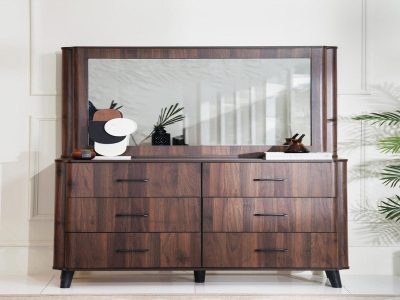
A neutral sofa in a room anchored by a dramatic area rug is a background piece. A simple dining chair that reads as part of the table rather than as a distinct element is a background piece. A bedside table, a console behind a sofa, a bookcase that recedes against the wall – all background pieces when properly selected and positioned.
The mistake people make most often with background pieces is trying to make each one interesting on its own terms. An eclectic mix of side tables, each chosen because it was appealing in isolation, produces a room where the eye has nowhere to rest. Background pieces are doing their best work when they’re slightly boring individually and cohesive collectively.
This is where reading Coleman Furniture reviews for upholstered pieces in neutral tones can surface useful information about how fabrics photograph versus how they read in an actual room – because a background piece that photographs interestingly often reads as a statement piece in person, which can disrupt the hierarchy you’re trying to build.
How to Decide Which Is Which
The decision about what plays the statement role and what plays the background role should ideally be made before buying rather than after, but it can also be applied retrospectively to a room that feels unsettled.
Start by identifying what you want the room to be about visually. In a living room, it might be the sofa and the art above it, with everything else supporting. In a dining room, it might be the table and the light fixture above it. In a bedroom, it might be the bed and headboard. That focal pairing becomes the statement; everything else becomes background.
Once the statement is identified, evaluate every other piece in the room against a single criterion: does this support the statement, or does it compete with it? A coffee table with strong visual character in a room already anchored by a distinctive sofa competes. A simple, well-proportioned coffee table in a complementary material supports. The distinction isn’t about quality – a beautiful, well-made piece can absolutely be a background piece. It’s about where that piece sits in the room’s visual hierarchy.
Practical Applications
A few patterns worth knowing for common situations:
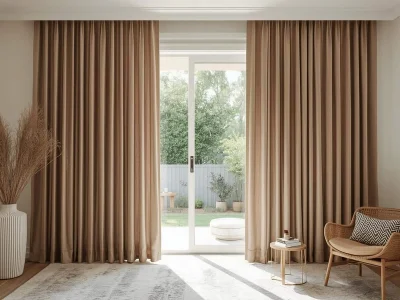
In rooms with architectural features – a fireplace, large windows, an interesting ceiling – the architecture often functions as the statement, which means the furniture can and should be more restrained. Fighting the room’s architecture with competing furniture statements is one of the most common reasons rooms feel cluttered rather than layered.
In rooms without strong architectural features, the furniture has to create the hierarchy from scratch. This is where a genuinely distinctive anchor piece – a sofa in an unexpected fabric, a dining table with a memorable silhouette, a bed with a headboard that functions as a piece of design – does the work that architecture would otherwise do.
Color can function as either a statement or a background tool. A single piece in a saturated color in an otherwise neutral room makes that color read as intentional and gives the piece additional visual weight. Multiple pieces in competing colors produce a room that feels busy regardless of how good each piece is individually.
The Underlying Principle
The reason rooms that feel designed look the way they do is that the person who put them together made decisions about hierarchy – consciously or not. They decided what the room was about and made everything else serve that decision.
That’s a more achievable goal than it might sound. It doesn’t require an unlimited budget or professional help. It requires deciding what you want people to notice first, buying that thing with intention, and letting everything else do the quieter work of holding the room together.
Most rooms fail not because the individual pieces are wrong but because nobody decided which ones were supposed to stand out.




Comments