
 By
By 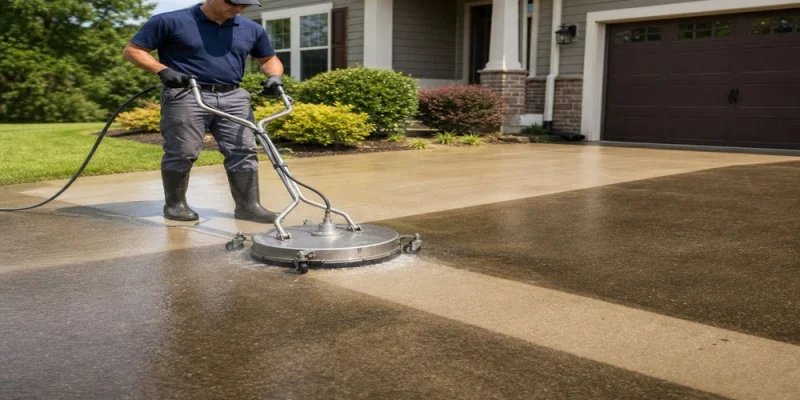
Dirt does not show up all at once. It settles slowly on siding, concrete, patios, decks, fences, and driveways until a property starts to look dull or neglected. Power washing is one of the fastest ways to remove that buildup and bring exterior surfaces back to life.
For homeowners and property managers, Power Washing is more than a quick cosmetic fix. Done properly, it can remove grime, algae, mildew, pollen, tire marks, and other contaminants that an ordinary garden hose cannot handle.
A professional technician power washing a residential concrete driveway with a surface cleaner, visible water spray, bright clean concrete contrasting with dark stained pavement, realistic suburban home exterior
What Power Washing Does
Power washing uses high-pressure water, sometimes with heated water or cleaning solutions, to loosen and remove stubborn dirt from outdoor surfaces. While people often use “pressure washing” and “power washing” interchangeably, power washing commonly refers to cleaning with heated water, which can help break down grease, oil, and heavy grime.
A hose may rinse away loose debris, but it usually cannot clean deeply into concrete pores, brick joints, textured siding, or weathered deck boards. Power washing reaches into those uneven areas and lifts away layers of buildup.
Common surfaces that benefit from power washing include:
- Driveways and sidewalks
- Patios and pool decks
- Vinyl, brick, and stucco siding
- Fences and retaining walls
- Garage floors and entryways
- Commercial storefronts and walkways
The result is a cleaner appearance, but it can also improve safety by reducing slippery algae, mildew, and dirt on walking surfaces.
Why Exterior Cleaning Matters
Exterior grime can affect more than curb appeal. Organic growth such as algae, moss, and mildew can hold moisture against siding, wood, concrete, and masonry. Over time, that moisture may lead to staining, surface wear, or slick areas where people walk.
Concrete and pavers are especially prone to discoloration from leaves, soil, tire marks, moisture, and pollutants. Decks and fences can weather faster when dirt and mildew remain on the surface. Siding can look older as pollen, dust, and airborne particles settle into seams and textures.
Responsible cleaning also means thinking about runoff. Wash water can carry dirt, detergents, oils, and debris toward storm drains if it is not managed carefully. The U.S. Environmental Protection Agency explains stormwater concerns here: https://www.epa.gov/npdes/npdes-stormwater-program
Power Washing vs. Soft Washing
Not every surface should be cleaned with strong pressure. Choosing the right method is one of the most important parts of exterior maintenance.
Power washing is best for durable materials such as concrete, brick, stone, and some metal surfaces. These areas can usually handle higher pressure when the correct nozzle, distance, and technique are used.
Soft washing uses lower pressure along with cleaning solutions. It is often better for painted siding, older wood, roofing, and delicate surfaces that could be damaged by aggressive force. For example, too much pressure on vinyl siding can force water behind panels, while too much pressure on wood can raise the grain or leave marks.
A good cleaning approach matches the method to the surface instead of using one pressure setting everywhere.
When to Schedule Power Washing
Most homes benefit from power washing once or twice a year, depending on climate, shade, tree coverage, and exposure to road dust or moisture. Properties in humid areas or under heavy trees may need cleaning more often because algae and pollen collect faster.
Spring is a popular time because it clears away winter residue and prepares outdoor areas for warmer weather. Early fall can also be useful before wet leaves and cooler temperatures create slippery walkways.
Commercial properties may need more frequent cleaning. Storefronts, sidewalks, parking areas, and dumpster pads face foot traffic, spills, gum, grease, and daily debris. Keeping these areas clean supports a better first impression and may reduce slip hazards.
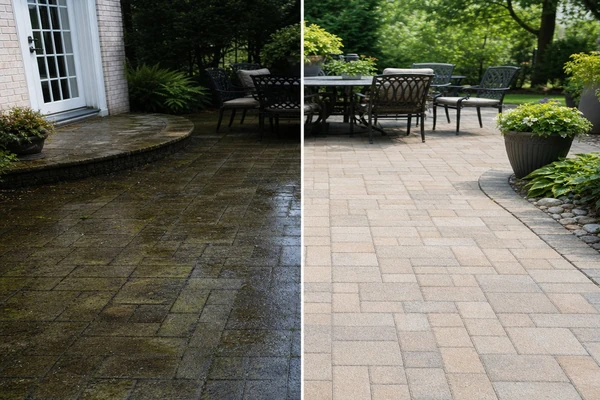
Before and after split-view of a backyard patio being power washed, one side dark with algae and dirt, the other side clean and bright, realistic residential outdoor setting
Safety Tips Before Power Washing
Power washing equipment can cause damage or injury when used carelessly. The spray can etch wood, scar softer concrete, strip paint, damage window seals, or cut skin at close range. Safe cleaning starts with respecting the force of the water.
Before starting, inspect the area for cracked concrete, peeling paint, loose siding, damaged wood, or fragile fixtures. Move furniture, planters, vehicles, toys, and outdoor décor away from the work zone. Cover outlets, lights, and sensitive areas when needed.
Wear closed-toe shoes, eye protection, gloves, and long pants. Never aim the spray at people, pets, windows, electrical components, or gaps around doors and siding. If mold is a concern, the CDC offers practical advice in its mold cleanup guidance for situations where growth may require extra care.
DIY or Professional Power Washing?
Some homeowners rent a machine and handle small projects themselves. A short walkway or lightly stained patio may be manageable with patience and the right equipment. Still, the risks are easy to underestimate.
The wrong nozzle, pressure setting, or cleaning solution can leave lines in concrete, gouge wood, damage siding, or harm landscaping. Rental machines also vary in quality, which can make results uneven.
A professional brings experience with surface types, cleaning solutions, pressure levels, runoff control, and efficient cleaning patterns. Just as important, professionals know when not to use high pressure. That judgment can prevent costly damage.
Hiring help is often the better choice for large driveways, multi-story homes, stained concrete, decks, delicate siding, commercial areas, or surfaces with unknown coatings.
Keeping Surfaces Cleaner Longer
After power washing, simple maintenance can extend the results. Trim shrubs and branches so sunlight and airflow can reach siding, decks, and walkways. Sweep leaves from patios and driveways before they stain. Fix drainage issues that allow water to pool on concrete or pavers.
Wood decks and fences may benefit from sealing or staining after they are fully dry. Concrete can also be sealed to help resist future stains from oil, rust, and organic debris.
Routine rinsing between deep cleanings can help prevent dirt from becoming embedded. The goal is to maintain surfaces before grime becomes difficult to remove.
Conclusion
Power washing is a practical way to refresh and protect exterior surfaces. It improves curb appeal, removes stubborn buildup, and helps reduce slippery areas around a property.
The best results come from using the right method for each surface. Whether you handle a small project yourself or hire a professional, routine exterior cleaning is a smart part of property maintenance.








Comments