
 By
By Seeing a cockroach run across a kitchen counter or finding rodent droppings in a storeroom naturally creates urgency. But effective pest control in Singapore is rarely about how quickly someone can arrive with a spray can.
A useful response starts by identifying the pest, understanding where it is coming from and choosing a treatment that addresses both the immediate activity and the conditions allowing it to continue.
That distinction matters in Singapore. Warm temperatures, high humidity, dense housing, shared drainage systems, food-handling environments and frequent movement of people and goods can all create favourable conditions for pests. Some, including mosquitoes, rats, cockroaches and flies, also fall within Singapore’s regulated vector-control framework.
The National Environment Agency (NEA) requires companies carrying out regulated vector-control work to be registered as Vector Control Operators, while the technicians and workers performing the work must hold the relevant licence or certification.
At the same time, Singapore Standard SS 721:2025 has shifted the industry’s emphasis towards Integrated Pest Management, or IPM. The standard prioritises prevention, objective risk assessment, appropriate combinations of physical, biological and chemical controls, reduced pesticide dependence and continued monitoring.
For property owners, this creates a better question than simply asking, “Who can come today?”
The more useful question is: Who can assess the problem properly, act with appropriate urgency and reduce the chance of the infestation returning?
Fast Pest Control Starts With Correct Identification
Quick action is valuable when pest activity is increasing, but speed should not replace diagnosis.
A cockroach infestation requires a different strategy from termite activity. Rodents need different controls from bed bugs. Mosquito problems cannot be solved simply by treating the adult insects if stagnant water continues producing larvae nearby.
Before recommending a treatment, a competent pest-management provider should try to establish three things: which pest is present, how extensive the activity appears to be and what conditions are helping it survive.
That process may be relatively straightforward when cockroach droppings are concentrated behind kitchen equipment. It may be more complex where termites are concealed inside timber or where rodents are moving through ceiling voids and service areas.
In other words, a rapid inspection can be useful. A rushed diagnosis is not.
Pest Problems That Deserve Prompt Attention
Not every single insect sighting is an emergency, but certain signs justify early investigation because the infestation may be larger than the visible evidence suggests.
Cockroach Activity Beyond the Occasional Sighting
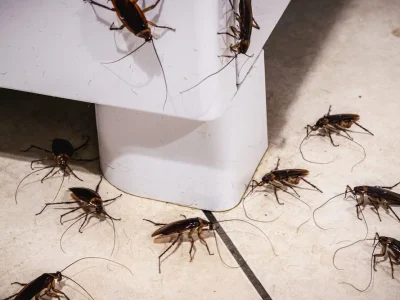
Cockroaches are highly adaptable and can establish themselves in kitchens, cupboards, drains, rubbish areas, appliance gaps and other warm or damp spaces.
One cockroach entering from outdoors is different from repeated nocturnal activity inside the property.
Warning signs can include droppings, egg cases, persistent activity around food-storage areas and a noticeable odour where populations are heavier.
Repeated daytime sightings can also deserve attention because cockroaches are usually more active at night. Activity in exposed areas may indicate competition for hiding spaces, although the number of insects seen should not be used alone to estimate infestation size.
Professional cockroach control commonly relies on more than a broad surface spray. Inspection, sanitation, targeted baiting, treatment of harbourages and recommendations to reduce food and water access can all form part of the programme.
This fits Singapore’s wider IPM direction: treat the pest, but also address why it is succeeding at the site.
Rodent Droppings, Gnawing and Repeated Sightings
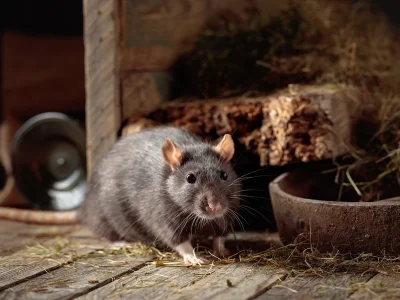
Rats deserve prompt attention because they can contaminate food and surfaces, damage property and reproduce if favourable conditions remain available.
NEA states that rats can spread diseases including leptospirosis, murine typhus and hantavirus infection, either directly or through contamination of food, water and the surrounding environment. Rats can also damage wires, insulation and other building materials through gnawing.
Common warning signs include droppings, gnaw marks, damaged packaging, noises in ceilings or concealed areas, grease marks along regular movement routes and repeated sightings.
A durable rodent programme should usually go further than putting down several traps.
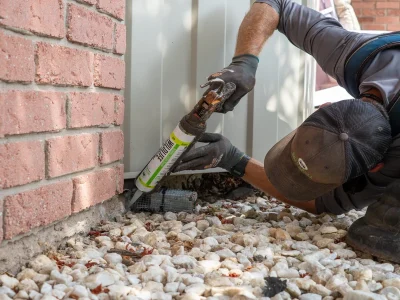
Food waste may need to be better contained. Gaps beneath doors or around pipes may need proofing. False ceilings, storerooms and external access points may require inspection.
NEA’s advice to the public specifically emphasises good housekeeping, reducing clutter and sealing potential entry points.
This is one reason “lasting pest control” is more about site management than simply using a stronger bait.
Mosquito Breeding Around the Property
Mosquito issues can require urgent attention because Aedes aegypti is the primary vector of dengue and Zika in Singapore.
The most important control measure is source reduction.
NEA states that mosquitoes can breed in stagnant water found in containers, drains, roof gutters, gully traps and numerous other small habitats. The agency continues to emphasise regular removal of stagnant water as the most effective way to prevent mosquito breeding.
This is why adult mosquito treatment should not be treated as a complete programme by itself.
A pest-management provider may inspect for actual or potential breeding habitats, treat water that cannot be removed where appropriate and use adult mosquito controls when justified by the site conditions.
Thermal fogging is also regulated operationally. Registered Vector Control Operators must notify NEA in advance of thermal fogging, and affected clients and surrounding premises need relevant notification and precautionary advice.
For householders, removing stagnant water remains the essential first line of prevention.
Termite Signs That May Indicate Hidden Activity
Termites are different from mosquitoes, cockroaches and rats because the main concern is property damage rather than disease transmission.
They can also be easy to underestimate because much of the activity occurs out of sight.
Possible signs include mud shelter tubes, discarded wings, damaged or hollow-sounding timber, frass associated with certain termite species and deterioration around cabinets, skirting, doors or other wooden elements.
The correct treatment depends partly on the termite involved.
Subterranean termites have soil-connected colonies and may travel into a building through concealed routes. Drywood termites establish colonies within timber and therefore require a different control strategy.
This is where inspection technology can add useful information when it is applied appropriately.
For example, Singapore provider Aardwolf Pestkare uses TermiCam thermal imaging as part of its subterranean termite inspection process and currently offers baiting, soil treatment and targeted spot treatment among its termite-control methods.
That should be viewed as one provider’s diagnostic and treatment approach rather than as a requirement that every termite company must use thermal imaging.
What matters editorially is the principle: treatment should follow the species, location and evidence found during inspection.
Bed Bugs Require Confirmation Before Treatment
Bed bugs can create considerable anxiety because bites may appear before the insects themselves are found.
However, bites alone are not enough to confirm an infestation.
NEA notes that bed bugs tend to hide around sleeping areas, including mattresses, bed frames, furniture, wall coverings and other concealed locations. Importantly, bed bugs are not known to transmit diseases to humans, although their bites can cause itching, discomfort and allergic reactions in some people.
Where an infestation is confirmed, treatment may require several methods.
NEA describes typical bed bug management as a combination of chemical and non-chemical controls, potentially including vacuuming, hot laundering, steam, heat treatment, removal of harbourages and insecticide use.
This makes bed bugs another poor candidate for a generic “spray once and forget it” approach.
What Professional Pest Control in Singapore Should Include
An effective pest-control service normally consists of several stages rather than one treatment event.
Inspection Before Intervention
Inspection should establish where the pest is active, how it may be entering or spreading and what environmental conditions are contributing to the infestation.
A technician may inspect drains and appliance gaps for cockroaches, entry openings and food sources for rodents, stagnant water for mosquitoes or timber and concealed structures where termites are suspected.
The scope naturally changes according to the property.
A condominium unit has different risks from a landed house. A commercial kitchen requires different attention from an office. A warehouse receiving regular deliveries has different exposure from a residential bedroom with bed bugs.
The inspection should therefore shape the treatment rather than simply confirm a pre-selected service package.
A Treatment Plan Based on Risk
SS 721:2025 provides a useful framework for understanding modern pest management.
Instead of defaulting immediately to chemical treatment, the standard promotes prevention first, risk-based assessment and an appropriate combination of physical, biological and chemical controls. It also encourages targeted applications and reduced reliance on pesticides where practical.
For customers, this means a good provider should be able to explain why a particular method is being recommended.
If baiting is proposed, what evidence supports it?
If proofing is required, where are the entry points?
If mosquito treatment is recommended, where are the breeding risks?
If repeated visits are necessary, what will be monitored between them?
The reasoning matters as much as the product.
Follow-Up and Monitoring
One of the strongest indicators of a professional programme is what happens after the first treatment.
NEA’s requirements for registered Vector Control Operators include providing comprehensive service reports and recommendations at agreed intervals and demonstrating that agreed objectives are being achieved. Inspections, findings and treatment work should be recorded.
This is particularly important for recurring infestations and commercial contracts.
A useful report can show where activity was found, what treatment was performed, whether monitoring indicates improvement and what changes the client should make on site.
Without that information, both the provider and customer may simply repeat the same treatment without knowing whether conditions are actually improving.
Same-Day Pest Control: Useful Promise or Marketing Shortcut?
A fast response can be valuable, particularly where rodents are present in a food-handling area, active termite damage is suspected or a significant infestation is disrupting normal use of a property.
But “same-day service” should be treated as an availability promise, not as evidence of treatment quality.
The first visit might involve inspection rather than complete treatment.
Some termite programmes require monitoring over time. Bed bug work may require site preparation and follow-up. Rodent treatment often involves several stages of control, monitoring and proofing. Mosquito management may involve repeated inspection of potential breeding areas.
A company that arrives within hours can still provide poor pest management.
Conversely, a provider that schedules a proper inspection the next day may ultimately deliver a more appropriate programme.
For this reason, a guest article should avoid presenting same-day attendance as the defining feature of reliable pest control unless the specific provider being discussed clearly publishes and fulfils such a service commitment.
Fast assessment is valuable. Lasting control requires more than speed.
How Singapore Regulates Vector-Control Providers
Singapore’s regulatory terminology is worth getting right.
NEA does not simply issue one generic “pest control licence” covering every company, employee and pest in exactly the same way.
For regulated vector-control work, only companies registered with NEA as Vector Control Operators (VCOs) can undertake vector-control services.
Employees performing that work must hold the appropriate status as a licensed Vector Control Technician (VCT) or certified Vector Control Worker (VCW).
Members of the public are specifically advised by NEA to obtain vector-control services from registered operators.
When evaluating a provider, customers can therefore ask for evidence of its current registration and ensure personnel performing regulated work are appropriately licensed or certified.
NEA also advises service buyers to consider factors such as the provider’s number of trained technicians and workers, their experience, the equipment or surveillance technology used and the company’s track record.
These are more meaningful checks than simply asking whether the company has been “licensed.”
Choosing a Pest Control Company: What Matters Most
A useful comparison between providers should go beyond price and response time.
Current Regulatory Status
Where vector-control work is involved, verify the company’s NEA VCO registration and ask whether the technicians or workers attending the property hold the relevant credentials.
Do not rely on an old badge displayed on a website.
Registrations and licences have validity periods, so current status matters.
Experience With the Pest You Actually Have
A company may handle common cockroach or ant problems frequently but have less experience with drywood termites, bed bugs or complex rodent infestations.
Ask what evidence the provider found and how its recommended approach applies to that particular pest.
This also helps reveal whether the company has genuinely inspected the problem or is simply offering the same treatment to every caller.
Treatment Method and Site Recommendations
Providers should be able to describe what they intend to do without hiding behind technical language.
For example, a rodent programme may involve traps or bait stations together with proofing recommendations.
A cockroach treatment may combine sanitation advice and targeted bait placement.
A termite programme could involve baiting, soil treatment or localised intervention depending on the findings.
One Singapore example is Aardwolf Pestkare, which describes its broader approach as pest management rather than purely reactive pest control, beginning with accurate identification and an agreed solution. The company has operated in Singapore since 1997 and currently services residential and commercial environments.
That is useful contextual information, but longevity alone should never replace evaluation of the proposed treatment.
Safety Information
Be cautious whenever a provider describes treatment simply as “non-toxic” or “completely safe.”
Those phrases can oversimplify pesticide risk.
NEA requires pesticides used for vector-control work to be appropriately registered, while personnel need to follow relevant safety instructions and use appropriate personal protective equipment.
Customers should ask:
- What product or method will be used?
- Does anyone need to leave the treatment area temporarily?
- Should food, utensils, toys or pet items be removed?
- How long before treated areas can be re-entered or cleaned?
- Are there additional precautions for children, pets or vulnerable occupants?
A provider giving clear instructions is more useful than one relying on vague “eco-friendly” claims.
Written Scope and Follow-Up
A quotation should explain what you are actually buying.
Look for the areas to be treated, pests covered, number of visits, treatment methods, monitoring arrangements and any exclusions.
For recurring commercial work, reporting requirements should also be clear.
This reduces disagreements later about whether a revisit, additional pest species or new treatment area is included.
How Much Does Pest Control Cost in Singapore?
There is no meaningful single price that represents pest control across Singapore.
A small localised cockroach issue in a flat is not comparable with treating subterranean termites around a landed property.
Bed bug treatment can differ depending on the number of rooms and how extensive the infestation is.
A restaurant requiring ongoing rodent and cockroach monitoring has different needs from a residential customer requesting a one-off inspection.
Cost is commonly influenced by:
- pest species;
- size and type of property;
- severity and distribution of activity;
- treatment method;
- number of visits;
- accessibility of affected areas;
- monitoring or reporting requirements; and
- whether proofing or other corrective work is included.
An on-site inspection is often useful for more complex infestations because the provider can see the property rather than pricing from a short phone description.
That said, a company declining to publish fixed rates should not automatically be interpreted as more reputable. Some standard services may reasonably have published starting prices.
The more important issue is whether the quote accurately reflects the scope.
Residential Pest Control: HDB Flats, Condominiums and Landed Homes
Different Singapore homes face different pest pressures.
HDB Flats
Shared rubbish chutes, plumbing runs, corridor drains and neighbouring units can influence pest movement.
An infestation inside one flat may therefore be connected to conditions elsewhere in the building.
Where activity appears linked to common areas, residents may need to involve the relevant managing authority rather than repeatedly treating only the unit.
Condominiums
Condominiums have similar shared-building considerations.
Managing agents may already maintain pest-control programmes for common areas, while individual owners remain responsible for conditions inside their units.
If rats, cockroaches or mosquitoes appear to originate from shared drains, landscaping, refuse areas or service spaces, reporting the issue can be as important as treating the apartment.
Landed Properties
Landed homes generally have more exterior exposure.
Gardens, drains, roof gutters, perimeter soil and timber elements can create additional opportunities for mosquitoes, rodents and subterranean termites.
This does not mean every landed home needs frequent chemical treatment.
Regular inspection, water management, housekeeping and maintenance can often reduce risk substantially.
Commercial Pest Control Requires More Than Occasional Spraying
Restaurants, food premises, warehouses, offices and industrial properties typically require more structured pest-management plans because the environment is more complex.
In food premises, waste storage, drains, grease, incoming goods and food preparation can all create pest pressure.
Warehouses may need attention to loading bays, stored goods, pallets and perimeter access.
Offices can experience cockroaches or ants in pantries and may face rodent movement through shared building services.
Good commercial programmes often include scheduled inspections, monitoring, treatment records and recommendations for the site’s facilities or hygiene team.
A pest-management contractor cannot permanently solve overflowing rubbish, broken door seals, stagnant water or structural gaps without cooperation from the premises manager.
The most effective arrangement is therefore a partnership: the provider controls pest activity while the business corrects the conditions helping pests persist.
Integrated Pest Management Is Becoming the Better Benchmark
The most useful change in Singapore’s pest-management landscape is the move away from measuring service quality by how much pesticide is applied.
SS 721:2025 instead provides a performance-oriented framework based around IPM principles.
That means the service should increasingly be judged by questions such as:
Has pest activity decreased?
Have breeding or harbourage conditions been corrected?
Are monitoring results improving?
Are unnecessary pesticide applications being avoided?
Have recommendations been implemented?
This is a healthier benchmark for both homeowners and businesses.
A technician spraying the same area every month without investigating why pests keep returning is not necessarily providing better control than a programme using less pesticide but stronger inspection, proofing, sanitation and monitoring.
Pest Prevention Between Professional Visits
Property owners can do a great deal to reduce pest pressure without pesticides.
Keep food in sealed containers and clean spills promptly.
Dispose of rubbish properly and avoid leaving food waste exposed overnight.
Fix leaking pipes and eliminate unnecessary moisture.
Reduce clutter where cockroaches and rodents can hide.
Seal obvious gaps around doors, pipes and service penetrations where practical.
For mosquitoes, inspect frequently for stagnant water.
NEA continues to advise residents to remove water from potential breeding habitats, including plant trays, containers, drains and roof gutters.
These measures may appear basic, but they directly affect whether a treatment succeeds.
Pesticides cannot compensate indefinitely for constant access to food, water and shelter.
When DIY Pest Control May Be Enough
A small, isolated problem may sometimes be manageable without professional intervention.
A few ants entering around a food source may improve once sanitation is corrected and suitable consumer baits are used.
An occasional cockroach entering through an open door may not represent an established infestation.
Mosquito prevention begins with household removal of stagnant water.
Professional assessment becomes more valuable when activity persists, spreads or cannot be confidently identified.
Termites are particularly easy to mismanage because visible insects may represent only a small part of the colony.
Bed bugs can hide beyond the mattress surface.
Rodents often require entry-point investigation.
Repeated cockroach activity may indicate concealed harbourages that consumer sprays fail to reach.
DIY treatment should therefore be judged by results.
If the same pest keeps returning despite reasonable corrective action, the problem may need a more systematic assessment.
The Difference Between Fast Service and Lasting Pest Control
There is nothing wrong with wanting a pest-control company to respond quickly.
When pests affect food safety, disrupt sleep, damage property or create genuine health concerns, delays are frustrating.
But response time and treatment quality are two different measures.
Lasting pest management is more likely when four things happen together:
The pest is identified accurately.
The immediate activity is treated appropriately.
Environmental causes and entry routes are addressed.
The site is monitored long enough to determine whether control has actually been achieved.
This approach may take longer than one visit, but it is far more meaningful than simply promising that the problem will disappear after a single application.
Frequently Asked Questions
Does Every Pest Control Company in Singapore Need an NEA Licence?
For regulated vector-control work, companies must be registered with NEA as Vector Control Operators. Technicians performing the work must be appropriately licensed and workers appropriately certified. Consumers should verify current regulatory status when engaging vector-control services.
Is Same-Day Pest Control Always Necessary?
No. Fast attention can be useful where there is significant pest activity, but not every case requires same-day treatment. Some infestations require inspection, preparation or several treatment stages. The quality of the diagnosis and control plan matters more than response speed alone.
How Often Should Pest Control Be Done?
There is no universal schedule. Frequency depends on the property, pest species, surrounding environment and whether the service is preventive or responding to an existing infestation. Higher-risk commercial sites may require more frequent monitoring than a typical home.
Are Eco-Friendly Pest Treatments Completely Chemical-Free?
Not necessarily. “Eco-friendly” can describe IPM practices, targeted application, lower-toxicity products or reduced pesticide dependence. Ask the provider exactly what products and methods are being proposed instead of relying on the label alone.
Can Pest Control Be Safe Around Children and Pets?
Many treatments can be used safely when the correct product, dose and precautions are followed, but customers should not assume that every treatment is automatically harmless. Ask the provider about re-entry times, food protection, pets and other precautions relevant to the product being used.
When Should I Call a Professional for Termites?
Arrange an inspection when you find mud tubes, unexplained timber damage, discarded wings, hollow-sounding wood or other suspected termite evidence. Avoid disturbing suspected activity unnecessarily, as identifying the termite species and route of activity can help determine the appropriate treatment.
Are Bed Bugs Dangerous?
Bed bugs are not known to transmit diseases to humans, according to NEA. Their bites can nevertheless cause itching, discomfort and allergic reactions, and established infestations can be difficult to eliminate without a combination of control measures.
Is Mosquito Fogging Enough to Prevent Dengue?
No. Fogging targets adult mosquitoes and does not remove the water where mosquitoes breed. NEA identifies prevention of mosquito breeding and removal of stagnant water as the most effective foundation of mosquito control.
Conclusion
Reliable pest control in Singapore is not defined by how much chemical is sprayed or how quickly a technician reaches the door.
The better benchmark is whether the provider can identify the pest correctly, explain the proposed treatment, meet relevant regulatory requirements, address contributing conditions and demonstrate through follow-up that activity is reducing.
Singapore’s move towards Integrated Pest Management under SS 721:2025 reinforces that approach by focusing on prevention, risk assessment, targeted intervention and continuous monitoring.
For property owners who prefer professional assessment, Aardwolf Pestkare is one established Singapore provider offering pest-management programmes for homes and commercial properties, including termite, rodent, cockroach, mosquito and bed bug concerns. Its published approach emphasises identification, tailored treatment and continuing prevention rather than treating every infestation with the same method.
As with any provider, customers should verify the current service scope, regulatory status where applicable, safety instructions, treatment method and follow-up arrangements before proceeding.
Fast action can stop a problem from becoming worse. Lasting pest control depends on what happens after the first visit.







Comments